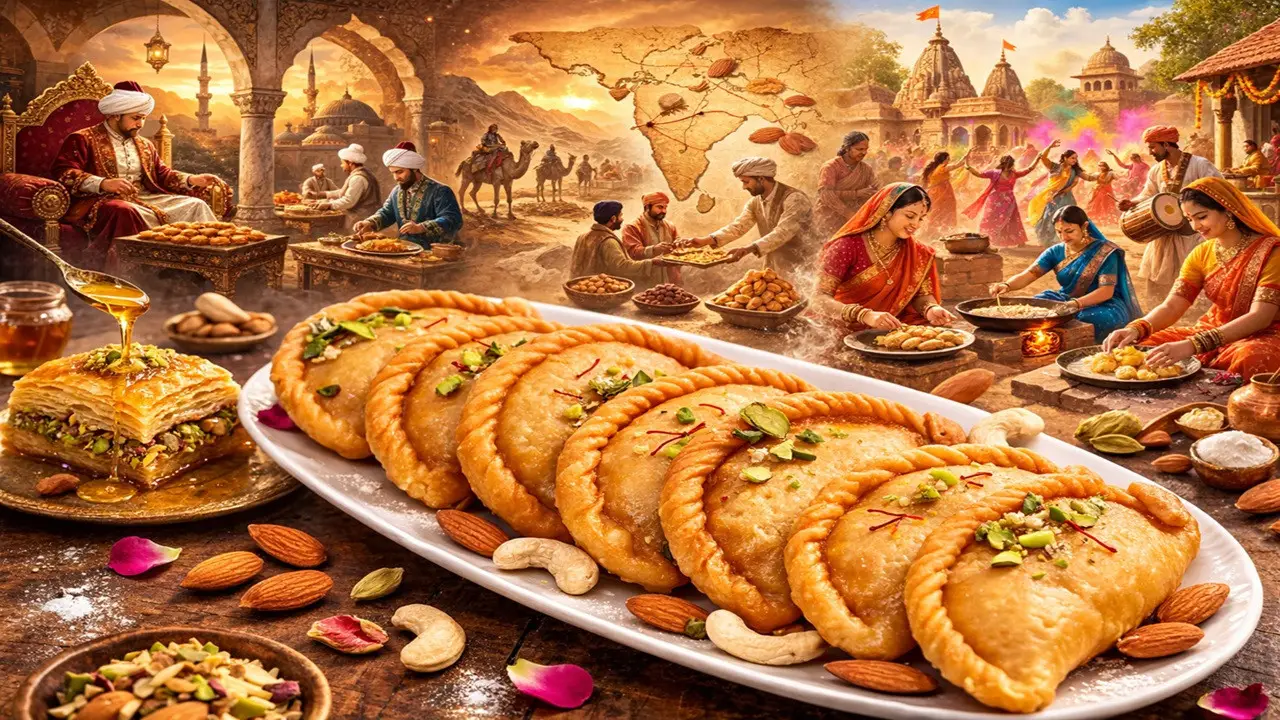
From Turkey’s Royal Kitchens to Bundelkhand: The 800-Year Journey of Gujiya (OpenAi)
New Delhi: During the Holi season, there is a special discussion about one sweet from the markets to the kitchens of homes and that is Gujiya. There is hardly any house in North India where preparations are not made for this festival of colours. In many families this tradition has been going on for generations. A few days before the festival, the process of roasting khoya, cutting dry fruits and kneading dough begins. But have you ever wondered where the story of Gujiya started?
According to researchers working on the history of food, an early form of gujiya is found in medieval India. Some old references mention sweet dishes in which jaggery or dry fruits were filled inside a thin layer of dough. It is believed that at that time they were dried in the sun or lightly baked. Gradually the method of frying was added and its taste became richer.
Some food experts believe that the old trade contacts between India and Central Asia also influenced the cuisine here. Nuts and sweet syrup are also used in the famous Turkish sweet, baklava. Although the two have different textures, the idea of sweet fillings and flaky dough points to cultural exchange. It is difficult to say that gujiya originated directly from some foreign sweet, but influences from different cooks have been found over time.
Gujiya has special importance in Braj and surrounding areas. Serving Gujiya to guests became a part of hospitality during Holi celebrations. It started being offered as prasad in temples also. Gradually this tradition spread throughout North India and the taste of Holi became associated with this sweet.
Earlier, Gujiya had simple ingredients like jaggery and sesame seeds. Later khoya, coconut, cashew nuts, almonds and cardamom were included. Now many types of Gujiyas are available in the market, baked, chocolate and filled with dry fruits. Health conscious people are also preferring gujiyas with less sugar or jaggery.
In Maharashtra it is called Karanji, in Gujarat it is called Ghugra and in South India it is called Kajjikayalu. The name and size may change, but the basic idea is the same. Sweet filling hidden in a layer of dough, which serves happiness along with the festival.
Gujiya is not just a dish but a part of shared festival memories. Its taste and appearance may have changed with changing times, but its presence on Holi is still equally important.




Copyright © 2026 Top Indian News